
Sustainability
keep calm
and
take care of the soil
regenerative
Viticulture
We strive to take care of our soil and promote biodiversity as much as we can. This circular farming system is both environmentally friendly and allows us to keep expenses down.
The idea is to work regeneratively. In short, it's about building up rather than just taking away. You work with the ecosystem instead of controlling it. Instead of plowing the soil and disturbing its natural structure, you allow micro-life to grow.
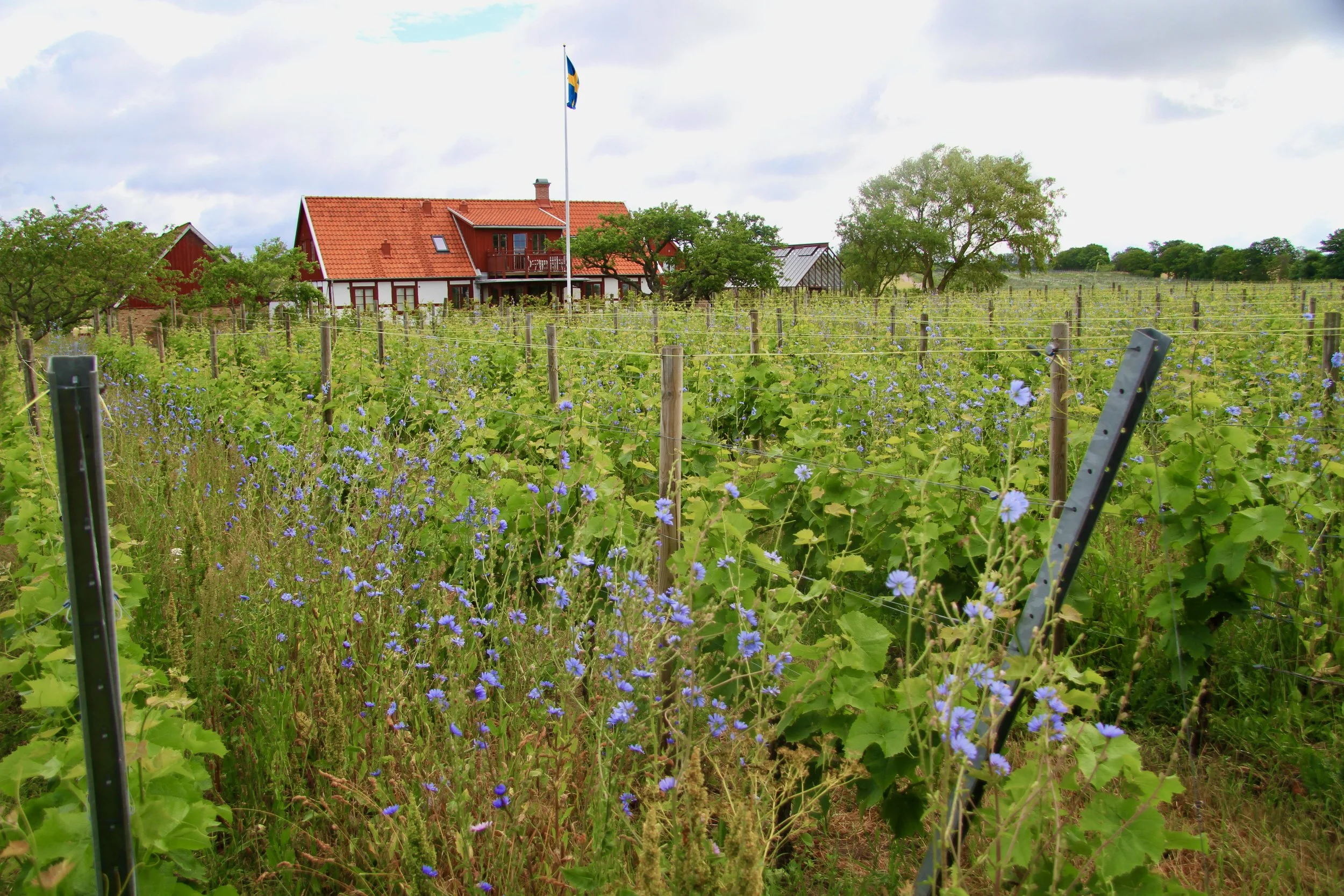
And it all starts with the choice of grapes. Our vineyard is planted with fungi resistant PIWI vines (Pilzwiederstandsfähige Traubensorten). Its durable nature makes it possible to reduce or completely abolish the use of synthetic pesticides.
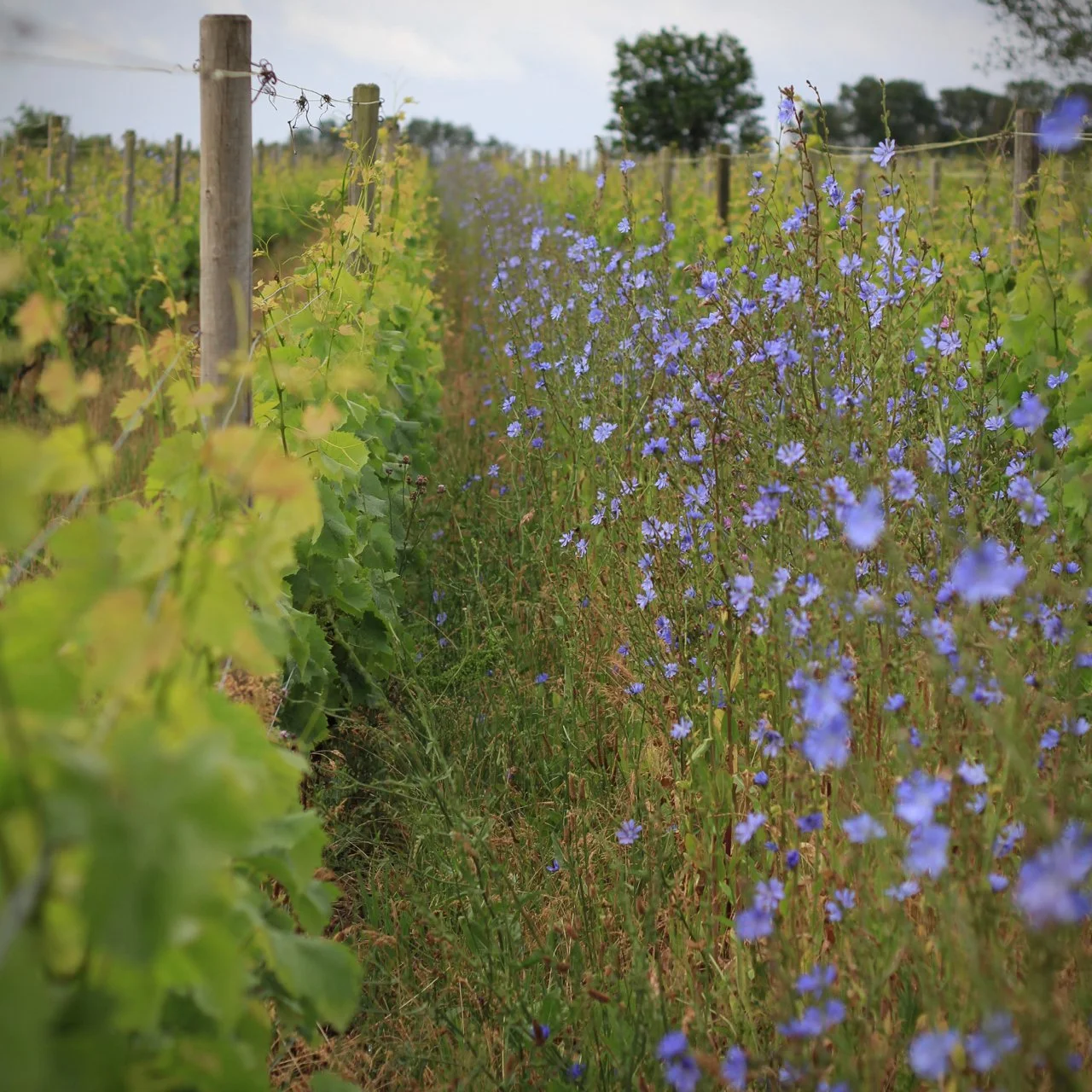
Between the rows, we have sown a special mixture of herbs and flowers that will attract bees and insects and bind nitrogen in the soil. After flowering, we cut the green down and leave on the ground. Our work with the soil contributes to store carbon in the ground; we are part of a collaboration called Svensk Kolinlagring.
Furthermore, we make our own compost from pruning residues, pomace, horse manure from local farmers and other biomaterials that are worked into the soil. This mixture encourages rich micro-life, which in turn produces healthy and strong vines.
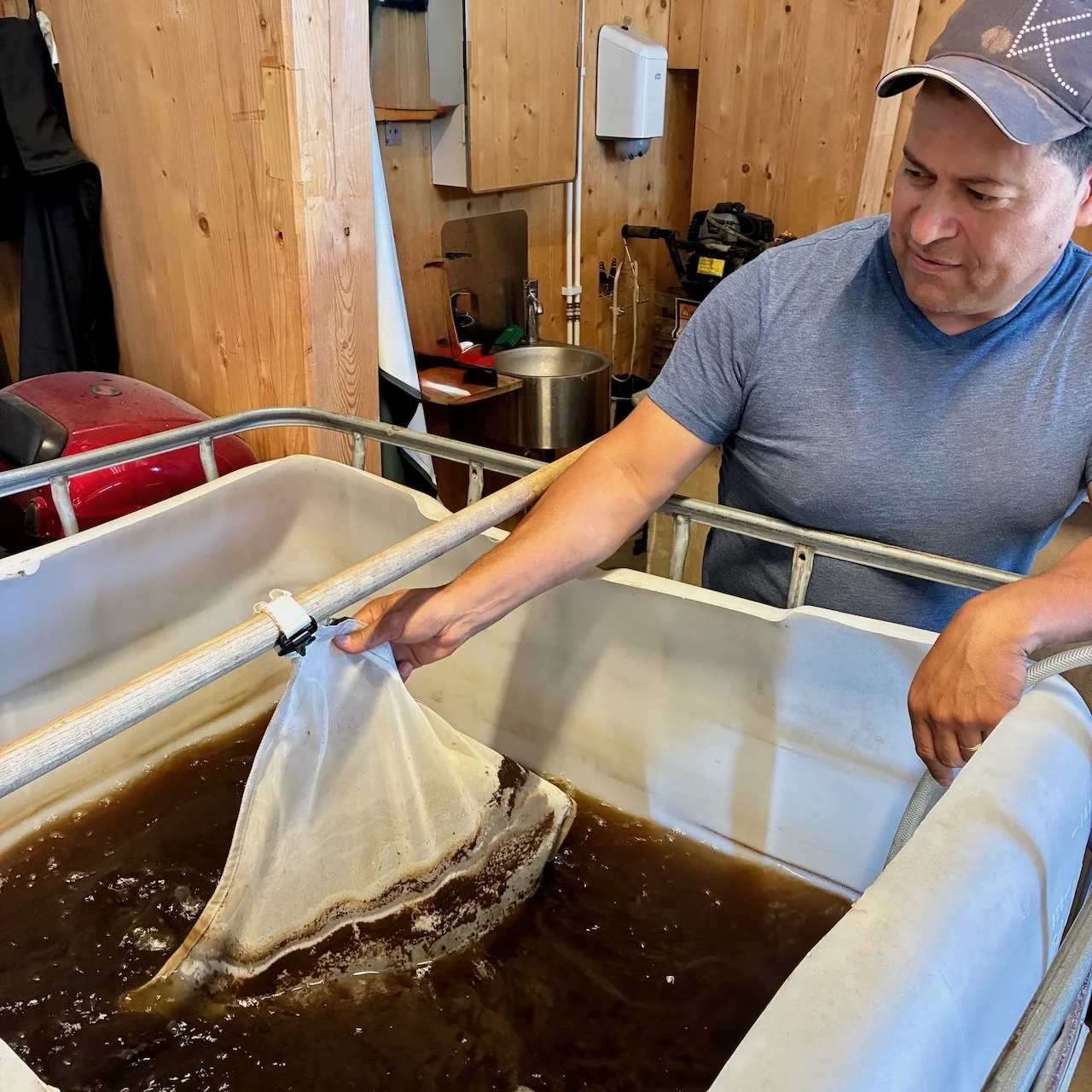
The compost is a useful sorce in many ways. We brew a special compost tea from it, which we spray on the vines in order to protect them.
”Then the leaves are covered with millions of good bacteria, so the fungus simply have no chance,” says our agronomist Jaime Santos.
Around several vineyards we have planted trees. They serve as windbreaks and produces fruit for the distillate. We have more than 1000 mirabelle trees and more than 1000 other trees, for example alder, birch, willow, linden, beech and rock rose.
As we intend to work proactively, we have our own weather station to keep track of the weather in our terroir.

Production
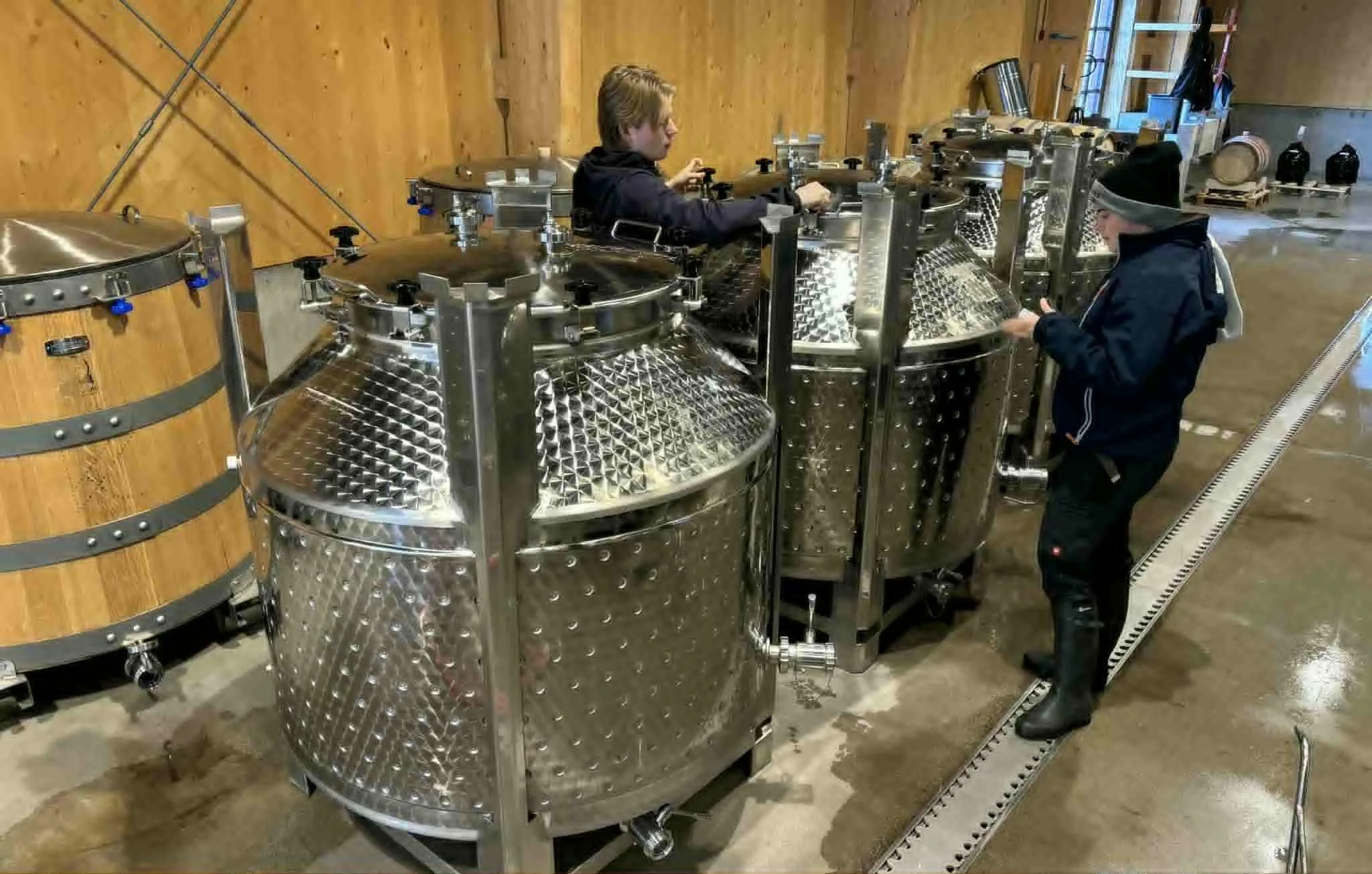
“We keep track of everything and try to find the best oenological goal for every plot”, says winemaker Nicola D’agostini, who indeed have good conditions for making great wine in a cool climate. State of the art technology in a functionally designed building.
Here, we keep the use of additives and sulfur to a minimum. We steam tanks, fillers and other surfaces before contact with the wine in order to reduce the use of chemicals and detergents. We filter through a modern cross flow filter, avoiding use of silica, cellulose and sulfur.
In the cellar, the wine is stored in both steel tanks and oak barrels. This is to obtain wines with multiple dimensions. The barrels are used for four to five years and come from different countries, although the French ones dominate. "In the first years, the new barrels are used for our top wines, such as Immelen and Askesäng," explains Nicola D'agostini.
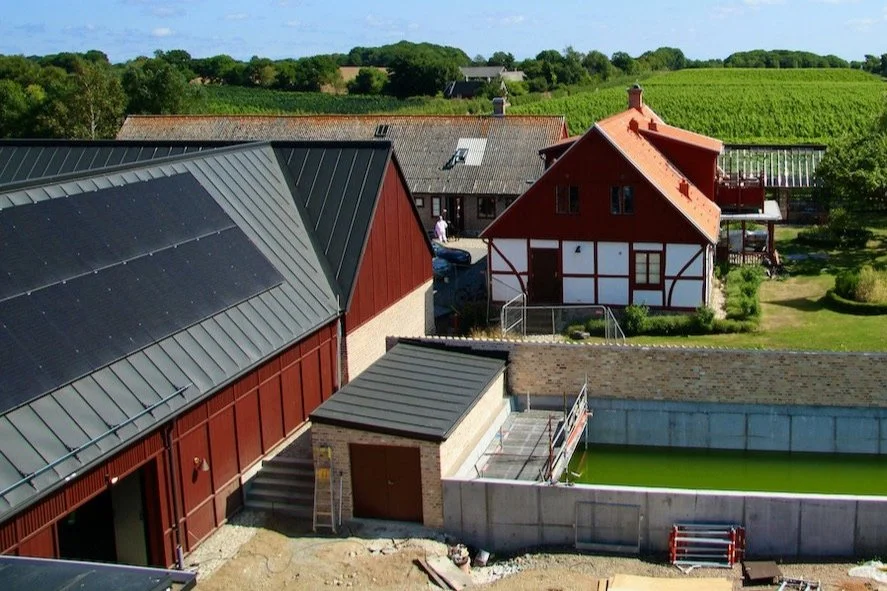
In our new wine production facility we implementing different circular production methods. We have our own water source that we use for cleaning (no irrigation). The waste water is filtered and we save it in our water reservoir.
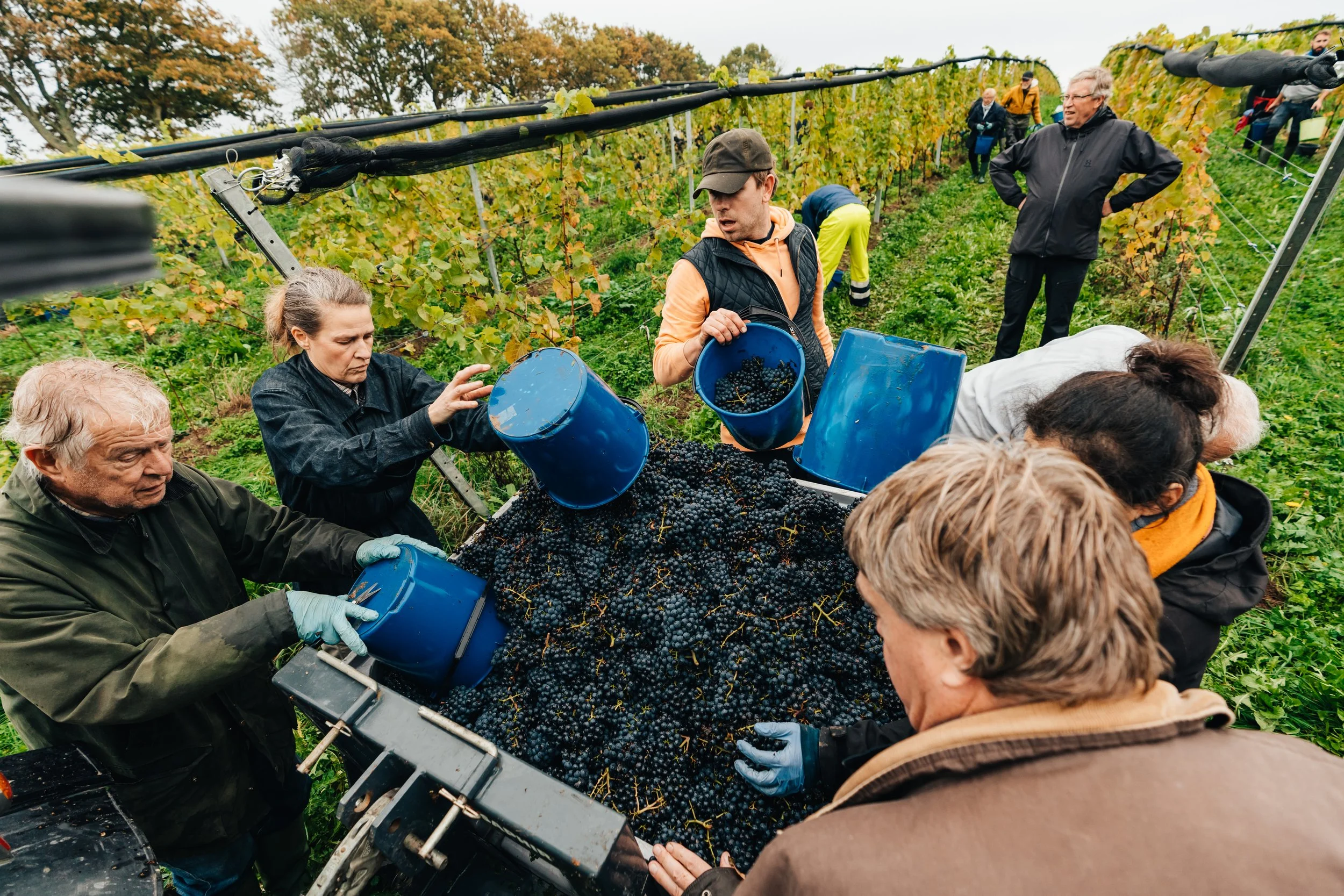
At harvest time, the pressed grapes are turned into spirits or returned to the vineyard as compost.
The new winery (ready in 2022) is mostly built of wood and other sustainable materials. For instance, it has an insulation material of old newspapers. On the roofs we have solar power giving both us and our area electricity.