
The future of Immelen is now being decided
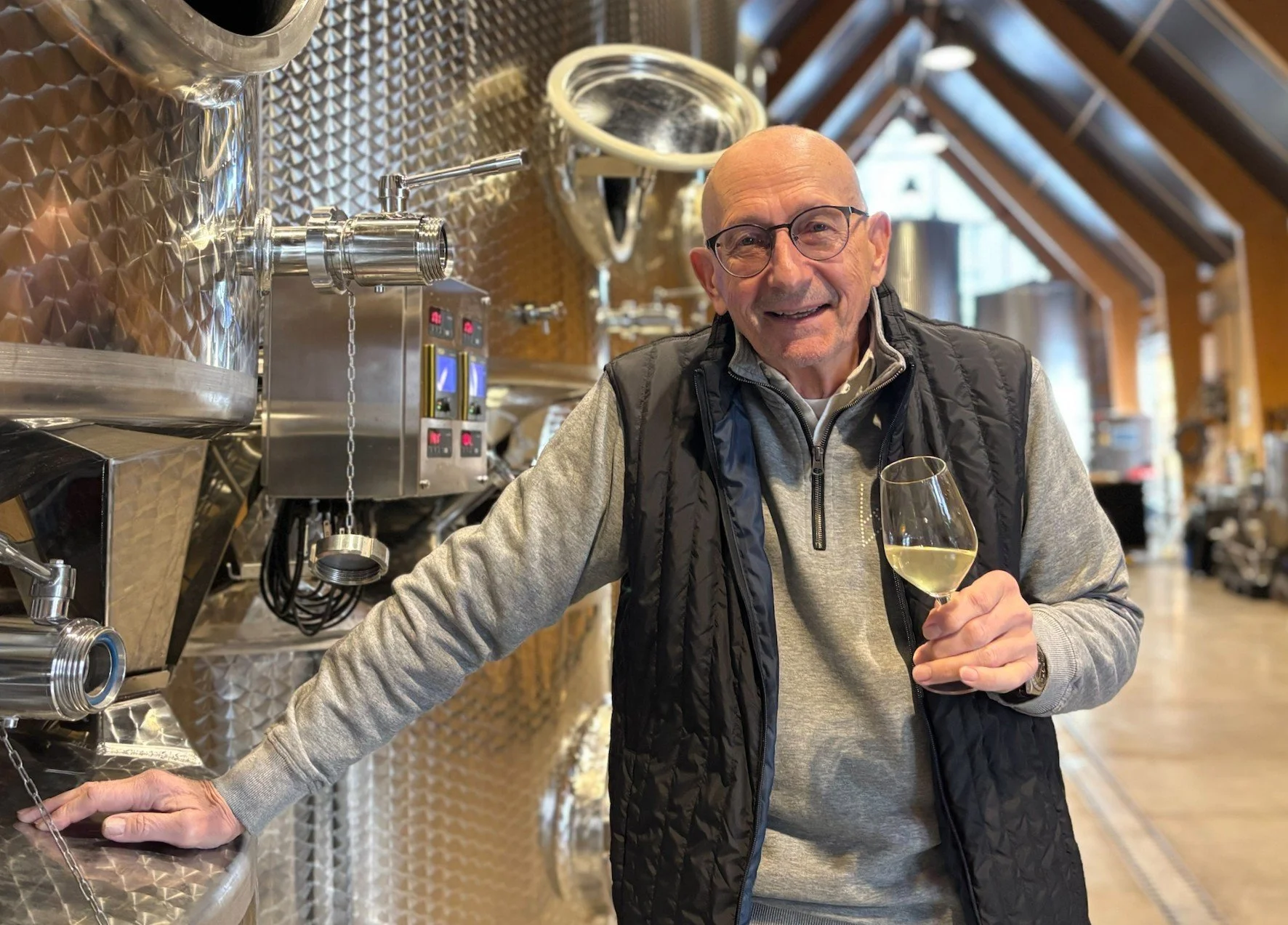
Robert Steidl, oenological consultant at Kullabergs Vingård.
Robert Steidl, oenological consultant, is very pleased after tasting the 2025 harvest at Kullabergs Vingård.
"All the wines are of good quality. It's all good. Nice fruit but not too intense.
At the beginning of each year, a group of experts gathers to taste all the barrels and tanks to decide how the wines should be blended. Which barrels and grapes will become Immelen; which will go to Lyckeri, etc. The group includes winemakers Helena Lindberg, Nicola D'agostini, the owners, and our oenological consultant Robert Steidl. Robert has worked at Klosterneuburg in Austria, where he was head of the oenology department and then head of the institute of viticulture for more than 25 years. He is now in his ninth year here and has a good overview of developments at Kullabergs Vingård. Two things are crucial.
"Every year, experience builds and the vines get older. Quality comes from the vineyard—it's a cliché, but it's true. Over time, the aromas in the grapes become more concentrated, and with higher quality, the chances of making good wine increase.
After two intense days, he sums up the 2025 vintage as very good, with inviting fruit that is not too dominant. It is no coincidence that Kullabergs Vingård makes cuvées.
“With a cuvée, you can create your own style, like Immelen. You can choose and blend the wine however you want.”
He cites Immelen and Askesäng as examples.
"Immelen is the top wine. Full-bodied but harmonious. Askesäng also has a full body but with more oak notes.”
The trick is to recognize Immelen and Askesäng in this tasting.
After a long career at Klosterneuburg, Robert Steidl has knowledge of both classic grapes and the resistant PIWI varieties grown in Sweden and at Kullaberg. In fact, both Donauriesling and Pinot Nova were crossed at the wine institute in Austria.
“There is certainly a difference between the grapes, especially in terms of structure. As PIWI is more resistant to fungal diseases, it also has more phenols. Phenols are bitter, which fungi don't like. For us winemakers, the challenge is not to extract too many phenols,” explains Robert Steidl.